How Much Rental Income Can You Really Make on a Zanzibar Villa? (2026 Data)
Let's be real for a second.
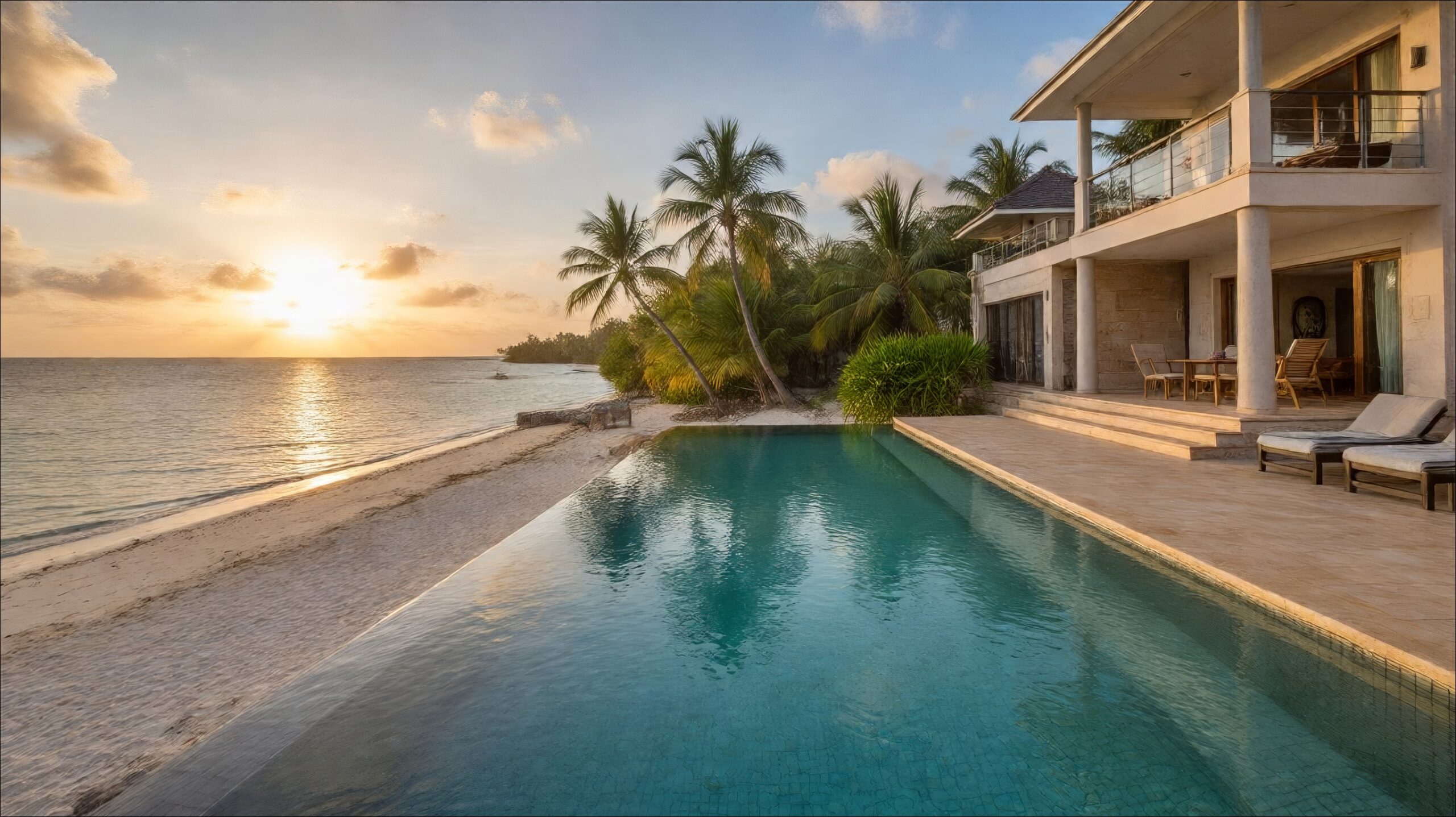
We've all been there. You're scrolling through social media, stuck in traffic or sitting in yet another Monday morning meeting, and an ad pops up. It's a stunning villa in Zanzibar. White sand. Turquoise water. An infinity pool that looks like it melts into the ocean.
The caption reads: "Earn $10k a month passive income while you sleep."
You look at your bank account. You look back at the screen. You start mentally packing your bags.
But before you quit your job and start practicing your "Jambo" for the investors, we need to talk about the reality of rental income in 2026. Because this year isn't like any other. And if you've been watching the news—the protests last October, the Middle East conflict shutting down airspace—you're probably wondering: is this still a good investment?
Here at Nyota Living, we don't do fairy tales. We do facts. So, based on 2026 market data, let's break down exactly how much money you can actually make renting out a Zanzibar villa, with all the cards on the table.
First, Let's Address the Elephant in the Room
You saw the headlines. October 2025. Post-election protests. Bloody. Brutal. Young people killed. The international media ran with it, and travel advisories went out.
The UK advised against non-essential travel. Poland did the same. Flights were cancelled. Ferries between Dar and Zanzibar stopped running. For a few weeks, the tourism machine ground to a halt.
One hotel manager in Arusha told reporters: "150 bookings and four international events planned for December have been cancelled. The hotel is below 30% full."
If you were an investor watching from London, Nairobi, or Lagos, your heart probably sank.
But here's what the news didn't tell you.

The Recovery Nobody Talked About
By January 2026, something unexpected happened: tourists came back.
According to official government statistics, Zanzibar received over 100,000 international visitors in January 2026—a nearly 20% increase compared to January the year before.
Europeans made up almost 70% of arrivals. Italians led the pack, followed by the French. And here's the kicker: bed occupancy hit nearly 88%.
That means nearly nine out of every ten available beds in Zanzibar were filled in January.
So what happened? Two things. First, tourists have short memories. Second, the unrest was largely contained to the mainland. Zanzibar stayed calmer. And by the time December hit, people were ready for their beach holidays.

The New Problem: The War and the Dubai Hub
Now, let's talk about the crisis unfolding right now.
We are in the middle of a conflict that has shut down major airports across the Middle East. Dubai—the main transit hub for Western tourists flying to Zanzibar—has closed its airspace. Airlines have suspended flights. Over 1,800 flights have been cancelled across the region.
This matters because most European tourists don't fly direct to Zanzibar. They connect through Dubai, Doha, or Abu Dhabi. And right now, those doors are slammed shut.
As of late February 2026, hundreds of thousands of travelers are stranded or scrambling to reroute. Airlines are advising passengers to check flight statuses before even leaving home.
So, what does this mean for your rental income? In the short term, it means uncertainty. If European tourists can't get here, bookings will soften. March, April, and May—already low season—could be even quieter than usual.

The "Airbnb Dream" vs. Zanzibar Math (2026 Edition)
With all that context, let's run the numbers. Because despite the turbulence, people are still investing. In fact, a massive new residential project just broke ground near Stone Town. Developers are betting big on Zanzibar's future. The question is: should you?
First, forget everything you think you know about 100% occupancy rates. Unless you are charging $10 a night (please don't), your villa will not be booked every single day.
The Rates: 2-Bed vs. 3-Bed Villas (2026 Update)
So, what can you charge? Based on current listings and booking data:
2-Bedroom Villa
3-Bedroom Villa

The Gross Revenue Reality Check
Let's do some napkin math for a 3-bedroom villa in 2026, factoring in the current climate.
The Great Money Drain: Fees, Fees, and More Fees
Here's where your gross revenue starts to shrink:
1. Property Management Fees (The Silent Partner)
Unless you plan on moving to Zanzibar full-time (spoiler: you don't), you need a management company. Good ones charge 20% to 25% of gross revenue.
On $76,700, that's roughly $16,800 to $19,200 gone. Poof.
2. Cleaning and Maintenance (The Reality of Island Life)
In Zanzibar, everything is working against you. The salt air corrodes metal. The sand gets everywhere. The power might flicker. You need a cleaner after every guest ($50-$80 per clean), plus a gardener, plus a pool guy.
Budget roughly $6,000 - $8,000 per year for this, depending on bookings.
3. Utilities and Internet (The Hidden Tax)
Air conditioning units work hard in Zanzibar. And guests love blasting them while leaving the doors open (bless their hearts). Electricity bills for a villa can hit $500-$800 a month in high season. Plus, you need fast, reliable internet or the reviews will murder you.
Annual utilities: $7,000+.
4. Repairs and Contingency (The "Something Broke" Fund)
The dishwasher will die. The pump will fail. Someone will break a glass. Set aside 10% of your gross revenue for repairs.
That's another $7,670.

The Net Profit: What Actually Hits Your Bank Account
So, Is It Still Worth It?
$38k a year is still a solid return, especially if you bought the villa at the right price. But it's not the "passive income" the social media ads promised you. And in 2026, with the Dubai situation unresolved, you need to be prepared for a bumpy ride.
But here's what the doom-scrollers miss: real estate is a long game. The developers pouring money into Zanzibar right now aren't thinking about March 2026. They're thinking about 2030. About 2040.
The real money in Zanzibar isn't just about rental income. It's about:
- Capital appreciation (the value of the villa going up over time).
- Personal use (you have a place to escape to).
- Forcing equity (buying off-plan and adding value).
The protests happened. People died. It was awful. The wounds are real. But the tourists came back anyway—because the beach is still beautiful, and life goes on. The war will end, and the flights will resume. They always do.

If you're looking for a pure cash-on-cash return that you can track on a spreadsheet every month with zero stress, buy treasury bills. But if you want to own a piece of the Spice Island, build intergenerational wealth, and have a place to send your parents for their anniversary—even in a messy world—the numbers still work.
Just remember: The pool guy isn't free. The AC isn't free. And that infinity view? You pay for it.
Welcome to the club.
Your future self—the one sitting on a veranda with a drink in hand—might thank you.
Disclaimer: All information provided is for general educational purposes only and does not constitute legal, financial, or professional advice. Always carry out your own due diligence and consult qualified professionals where appropriate.